
Top SEO Mistakes Businesses Make (And How to Avoid Them)
A lot of businesses think SEO failure looks dramatic.
They imagine penalties, ranking crashes, or technical disasters.
But most of the time, poor SEO performance comes from something much simpler: small mistakes repeated consistently over time.
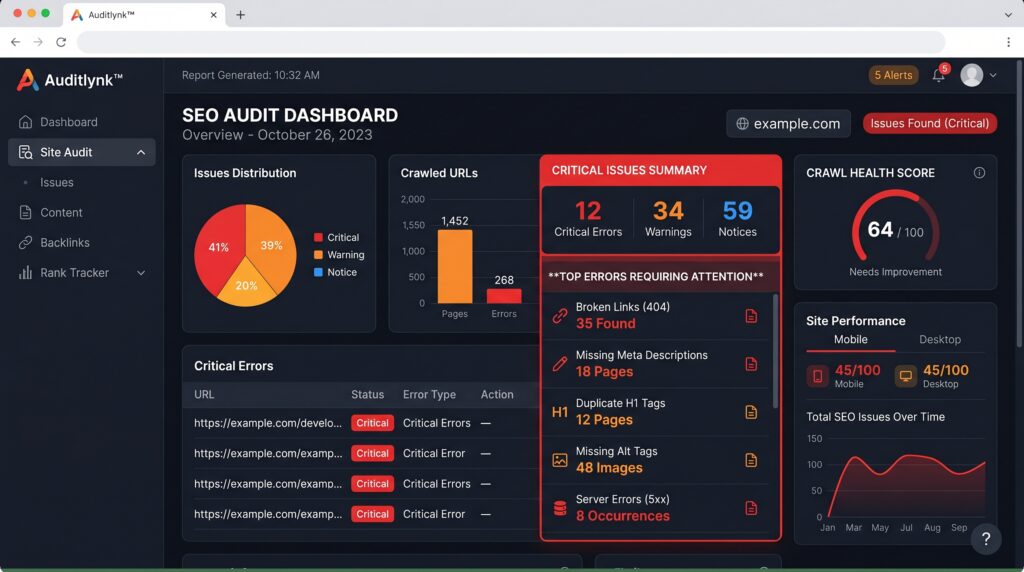
A website publishes content without strategy. Pages load slowly. Keywords are forced unnaturally. Technical issues stay unresolved for months.
Individually, these problems may seem minor.
Together, they quietly destroy visibility.
And the difficult part is that many businesses don’t even realize it’s happening until growth starts slowing down.

SEO Is More Fragile Than Most Businesses Think
What makes SEO challenging is not complexity alone, it’s accumulation.
Search engines evaluate hundreds of small signals simultaneously:
- Content quality
- User behavior
- Website structure
- Speed
- Relevance
- Authority
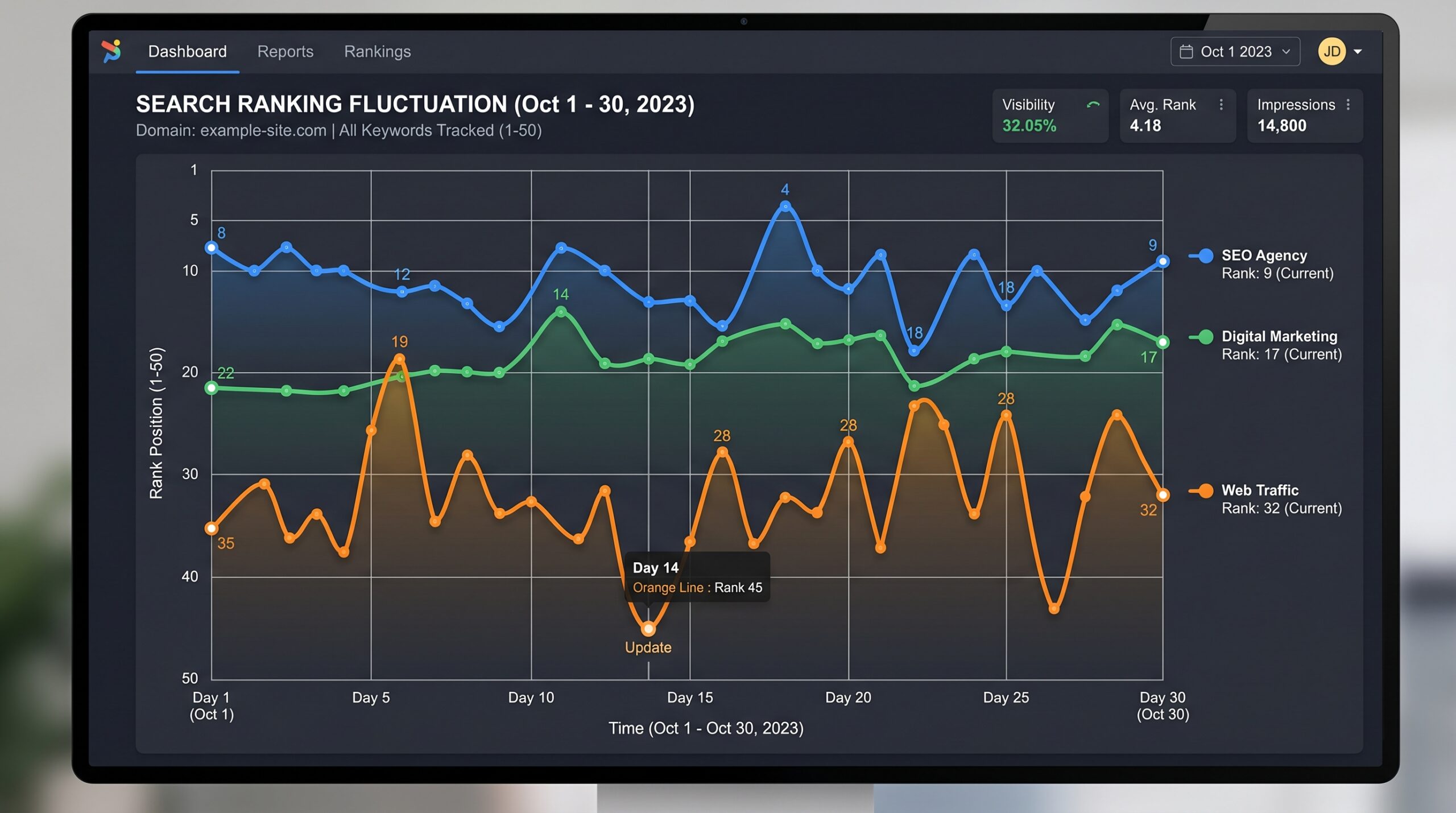
When several weak signals combine, rankings begin to weaken gradually.
Not overnight. Quietly.
Which is exactly why many companies struggle to identify what’s actually going wrong.
Mistake #1: Writing for Search Engines Instead of Humans
This remains one of the most common SEO problems even in 2026.
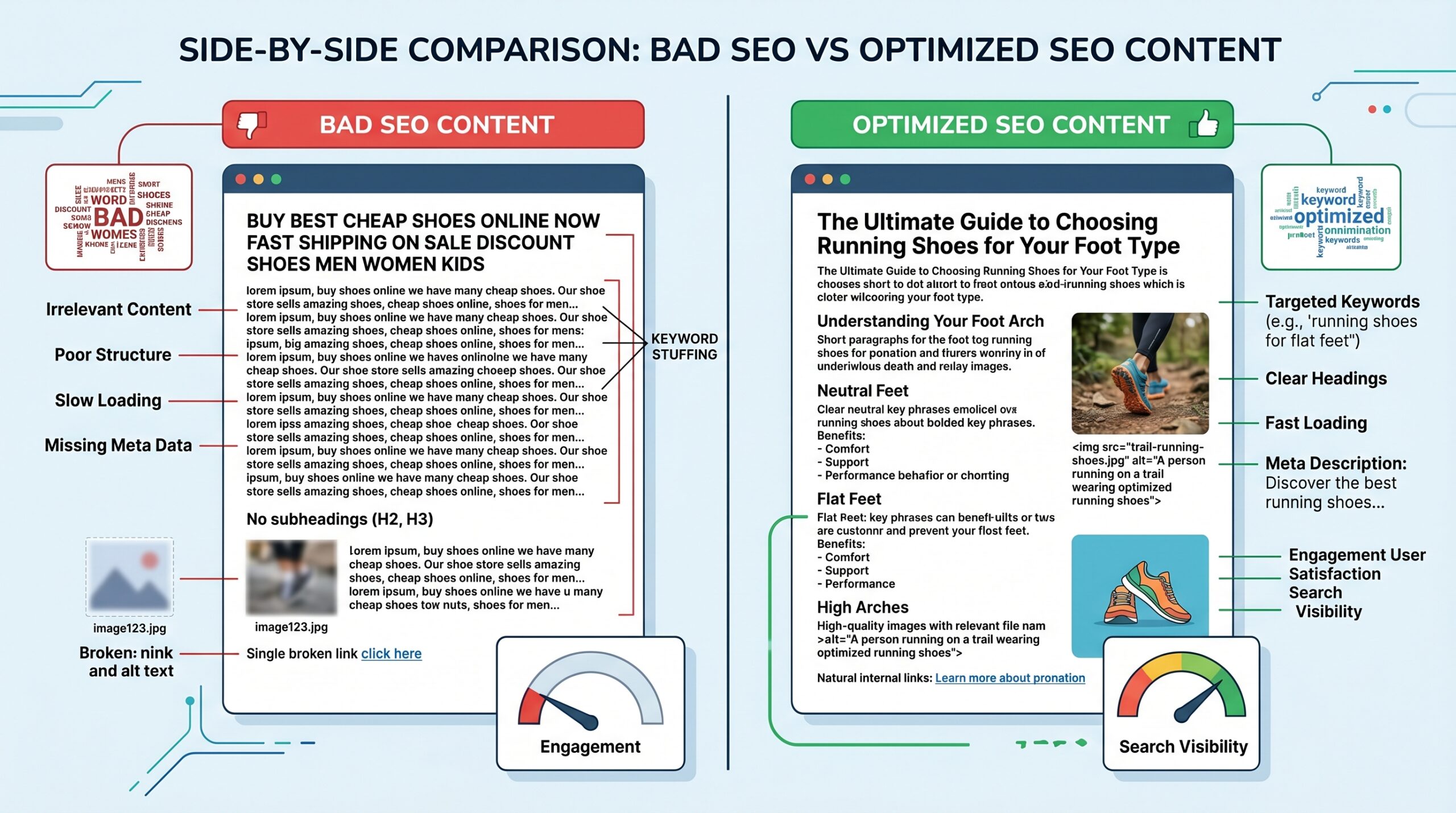
Some businesses still approach content as if stuffing keywords repeatedly will improve rankings.
But modern search engines have evolved far beyond that.
Google now prioritizes clarity, usefulness, and user satisfaction over keyword repetition.
Content that feels unnatural usually performs poorly because users disengage from it quickly and search engines notice that behavior.
Good SEO content no longer sounds “optimized.”
It sounds helpful.
Mistake #2: Ignoring Search Intent
Ranking for a keyword means nothing if the content doesn’t match what users are actually searching for.
This is where many businesses fail.
For example:
- A user searching for “best CRM tools” expects comparisons
- A user searching “what is CRM” expects education
- A user searching “buy CRM software” is ready for action
Treating all searches the same creates weak engagement and poor rankings.
SEO is no longer about matching words.
It’s about matching intent.
Mistake #3: Publishing Content Inconsistently
Mistake #4: Overlooking Technical SEO
Some websites have strong content but still struggle because the technical foundation is weak.
Broken pages, slow speed, indexing issues, poor mobile experience. These problems create friction both for users and search engines.
And technical friction affects visibility more than many businesses realize.
A website does not rank based on content alone.
It ranks based on overall experience.
Mistake #5: Treating SEO as a Short-Term Strategy
This is perhaps the biggest misunderstanding of all.
SEO is not advertising.
It does not produce instant spikes. It compounds over time.
Businesses that expect immediate results often abandon SEO too early, right before momentum begins building.
The companies that succeed are usually the ones willing to treat SEO as infrastructure, not campaign-based marketing.
Why These Mistakes Matter More in 2026
FAQ

Most SEO failures are not caused by one catastrophic mistake.
They are caused by small issues left untreated for too long.
And in competitive markets, even small weaknesses become visible eventually.
At Media90z, we don’t treat digitwe help businesses identify hidden SEO weaknesses and build stronger search systems designed for sustainable long-term growth.