
How Branding Impacts Customer Trust and Sales in Competitive Markets

Branding Is Not Design. It Is Perception.
One of the most common misconceptions in business is that branding equals visual identity.
While design plays a role, it is only a small part of a much larger system.
Real branding is about how your business is perceived across every touchpoint.
It includes:
- The way your brand communicates
- The tone of voice you use
- The consistency of your messaging
- The emotional response people have when interacting with your business
In simple terms, branding is not what people see. It is what they feel.
Trust Begins Before the First Interaction
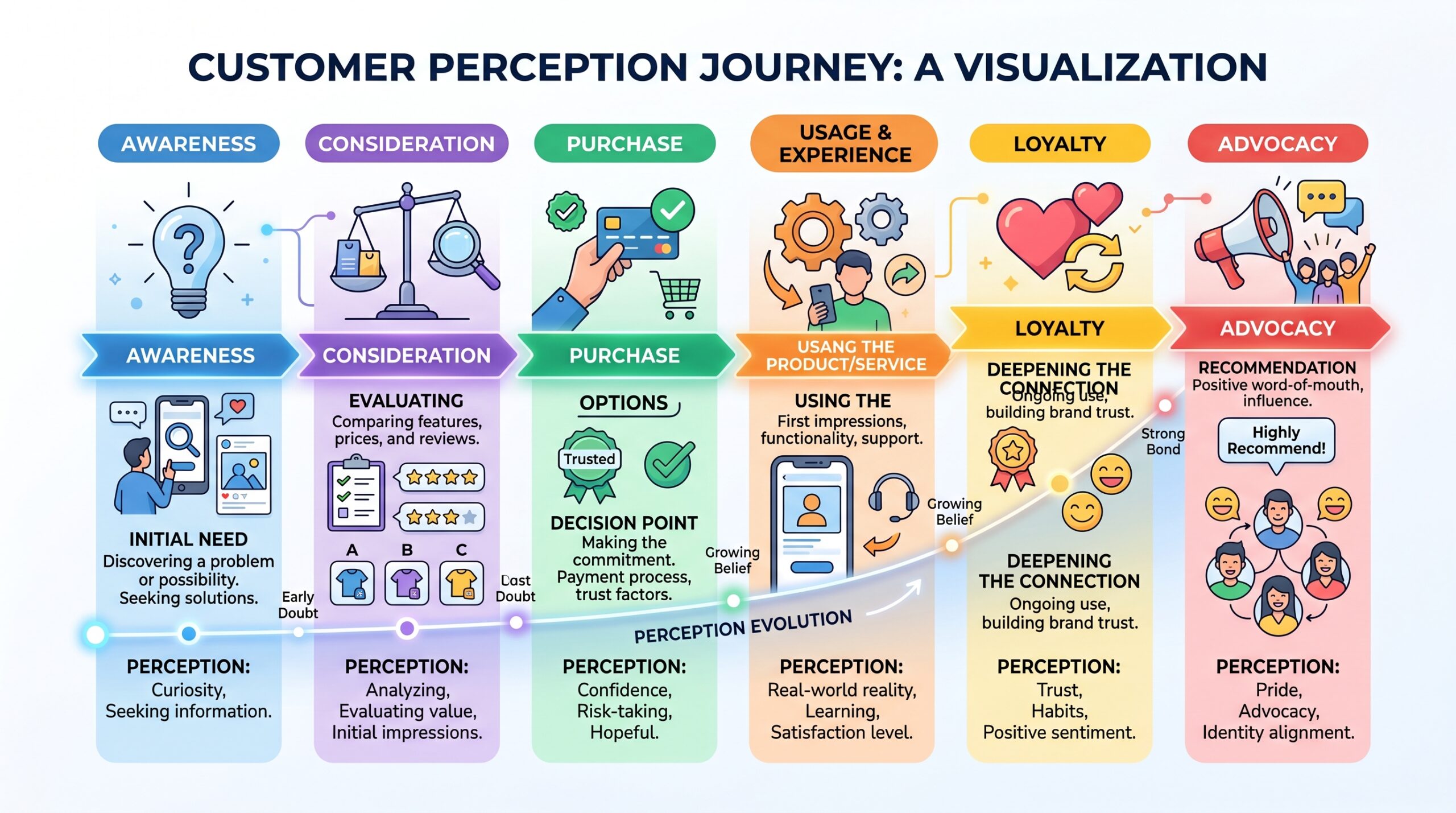
In modern markets, customers don’t wait for a sales conversation to form an opinion.
Their judgment starts the moment they encounter your brand online.
It could be a social media post, an ad, or your website. But within seconds, a perception is formed.
And that perception is rarely based on product quality. It is based on how professional, structured, and credible your brand appears.
This is why some smaller businesses outperform larger competitors. They simply look more trustworthy.
Consistency Builds Authority
Trust is not created in a single moment. It is built through repetition.
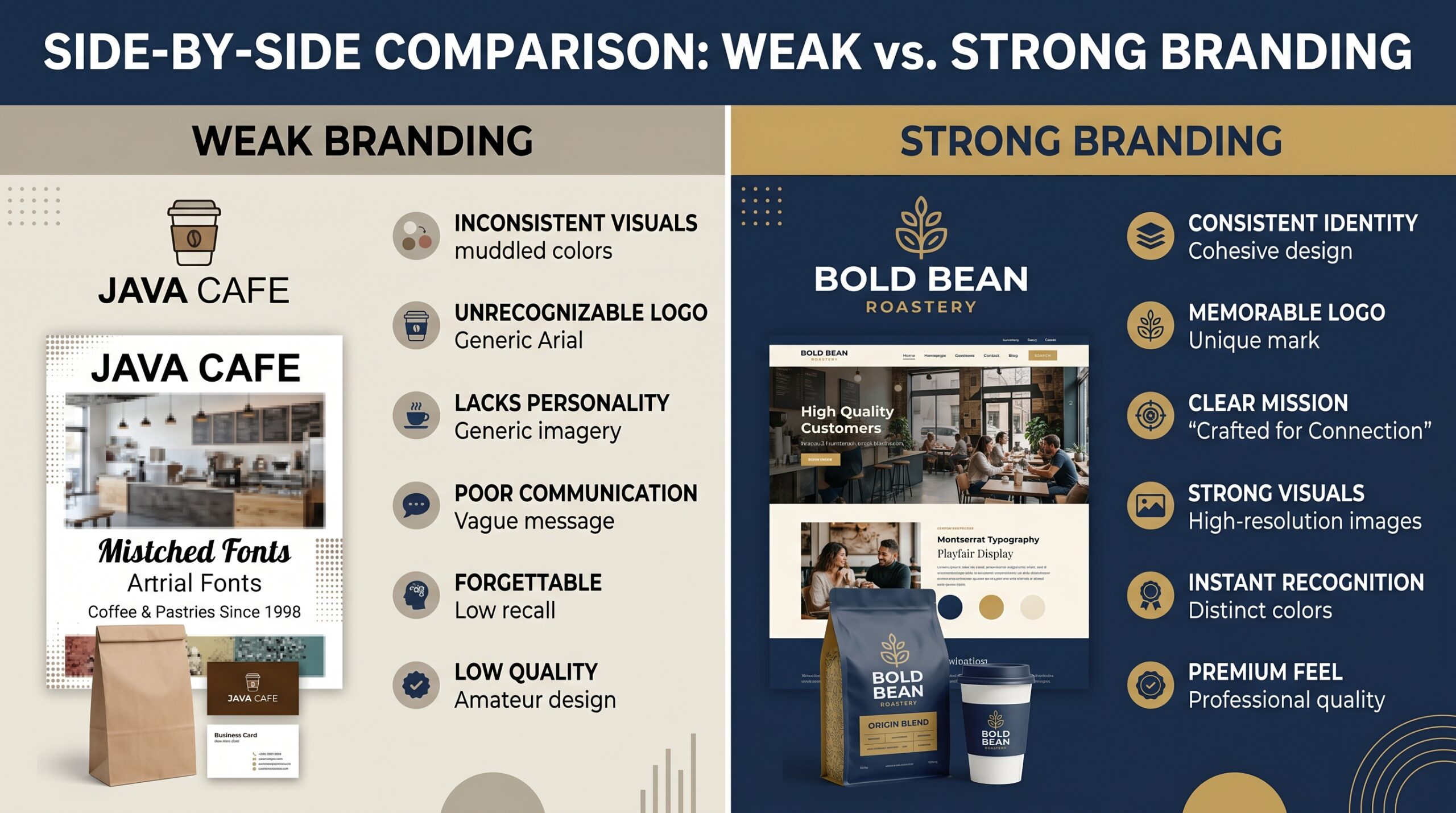
When a brand consistently presents itself in the same tone, style, and visual direction, it creates a sense of stability in the mind of the customer.
That stability translates into trust.
On the other hand, inconsistency creates confusion. And confusion weakens credibility even if the product itself is strong.
This is why consistent branding is often more important than aggressive marketing.
Branding Directly Affects Sales
- Feels more reliable
- Reduces hesitation during decision-making
- Increases conversion rates
- And often justifies higher pricing
Why Strong Branding Wins Competitive Markets
In saturated industries, products and services become increasingly similar over time.
What then separates successful brands from the rest is not functionality, but perception.
Strong branding creates mental positioning.
It allows a business to:
- Occupy a distinct space in the customer’s mind
- Build long-term recognition
- Reduce price sensitivity
- And increase loyalty over time
In other words, branding doesn’t just help you compete. It defines how you compete.
The Hidden Role of Branding in Business Growth
Many businesses attribute growth to marketing campaigns or paid advertising.
While these channels generate visibility, they do not guarantee conversion.
Branding is what transforms visibility into trust.
Without strong branding, even the best marketing efforts lose efficiency because customers may see the message but fail to believe in it.
Where This All Leads?
FAQ

In competitive markets, customers don’t always choose the best option.
They choose the one that feels more trustworthy, more familiar, and more credible.
And that decision is almost always shaped by branding long before the sale happens.
At Media90z, we don’t just create visuals. We build brand systems that shape perception, build trust, and drive long-term business growth.